Overview The document details a visit by Rotary International and partners to assess and support the Home Management of Malaria (HMM) program in Kuriva, focusing on program impact, challenges, and community engagement.
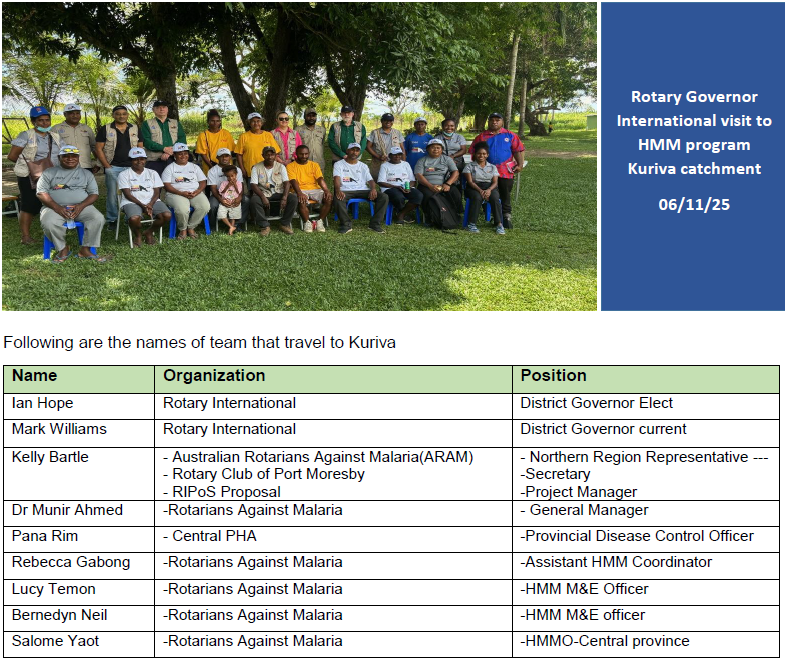
Visit Overview and Participants Rotary leaders and malaria program managers traveled to Kuriva, a sub-health center along Hiri Tano Highway, to evaluate the HMM program, which began in 2019 and expanded in 2020 through community volunteer training. The team included district and regional Rotary officials, malaria experts, and health officials, who engaged with community Malaria Volunteers (CMVs) and health facilities.
Program Background and Impact The HMM program aims to reduce malaria burden by training volunteers to conduct first-line testing and treatment, decreasing patient queues at health facilities. Since implementation, community members no longer need to travel long distances for testing and treatment, and volunteers express pride despite challenges like limited resources and safety concerns. CMVs requested monetary incentives to sustain their efforts.
Visit Activities and Findings The team visited health facilities and community sites, engaging directly with CMVs to understand operational approaches, challenges, and best practices. The program has demonstrated significant impact, with reduced facility congestion and improved community access to malaria care. Challenges include volunteer motivation and resource constraints, which threaten sustainability.
Conclusion and Next Steps The visit confirmed the program’s positive impact and identified areas for support, informing upcoming grant proposals. The team distributed supplies and engaged community volunteers, emphasizing the importance of continued support for program sustainability and scale-up.