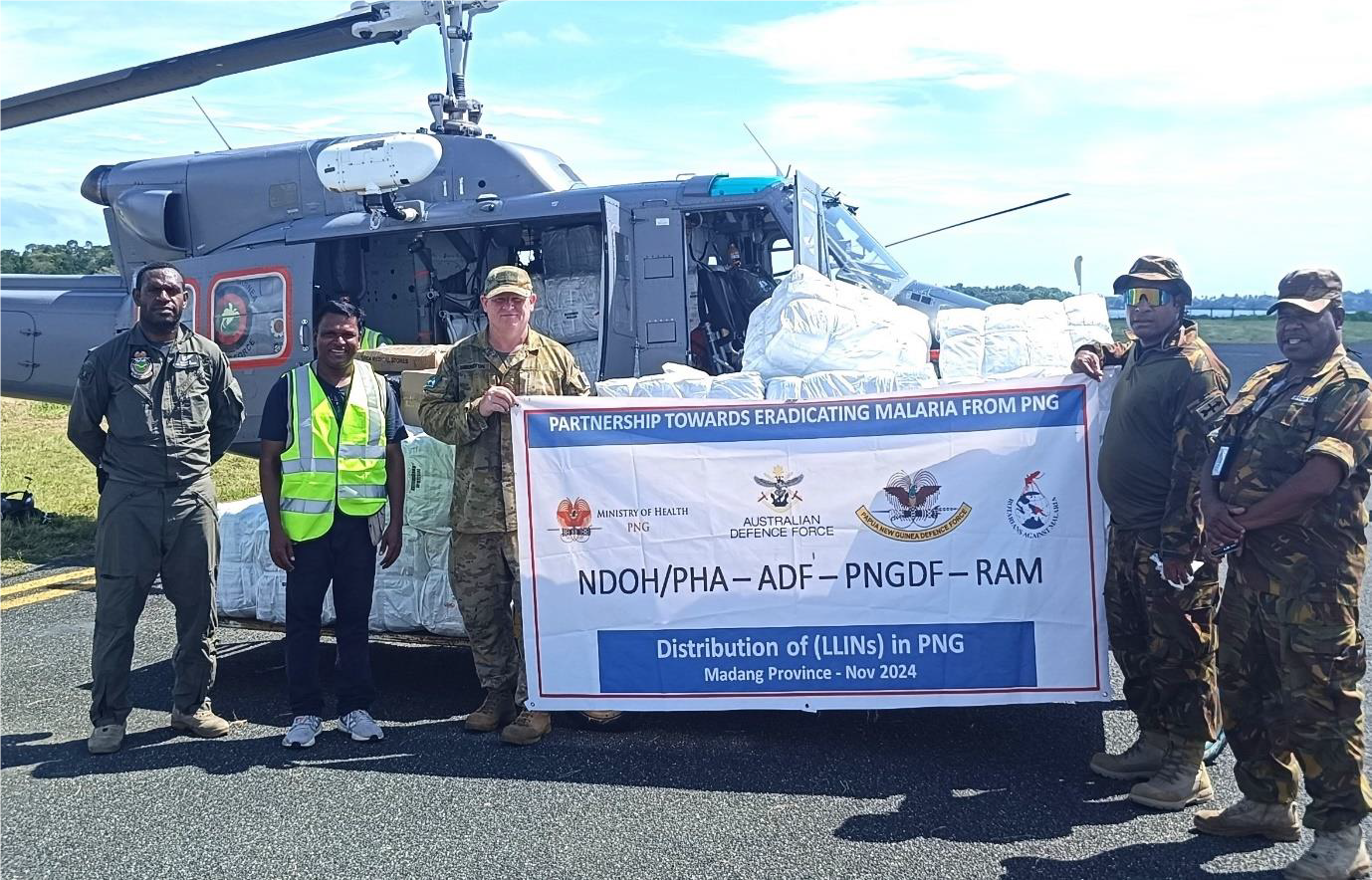
The document outlines the Home Management of Malaria (HMM) program in Papua New Guinea, detailing its implementation, scale, community engagement, sustainability, and partnerships to deliver community-based malaria diagnosis, treatment, and prevention.
Program Overview HMM is a community-driven model providing early malaria diagnosis, treatment, referral, and prevention at village level in remote, high-burden areas. Implemented nationally by Rotarians Against Malaria PNG (RAM PNG) since 1996, it aligns with the National Malaria Control Program and surveillance systems, with funding and support from the Global Fund and other partners.
History, Platform, and Geographic Coverage Starting in 2020 with Comic Relief funding, HMM became the sole national implementer under the Global Fund from 2021, embedding within national health policies. It currently covers 10 provinces plus Bougainville, reaching over 1,050 villages and 136 health facilities, with planned expansion into Manus and West New Britain provinces, involving additional partners like Catholic Church Health Services.
Workforce and Community Model Community Malaria Volunteers (CMVs), selected by local leaders to ensure trust and cultural legitimacy, operate in gender-balanced pairs (male and female) to improve access for vulnerable groups. Since 2020, nearly 2,776 CMVs have been trained, with over 2,000 active, capable of conducting rapid diagnostic tests, providing treatment, identifying severe cases, and reporting through health systems. The expansion aims to train an additional 2,100 CMVs by 2029, targeting approximately one CMV per 238 people.
Service Delivery and Impact The program has reached about 500,000 people, conducting around 600,000 RDTs over three years, with over 100,000 ACT treatments annually. Nearly all confirmed cases are managed at the community level, supported by strong referral pathways for severe malaria.
Sustainability and Government Transition By the end of the Program of Scale (PoS), a small percentage of CMVs and HMM officers are expected to transition into government roles. Costs are increasingly integrated into provincial health plans, anchoring HMM within routine primary health care to ensure sustainability beyond donor funding.
Partnerships and Funding The Government of PNG commits US$500,000, complemented by partners including Rotary clubs, Malaria Partners International, Aspen Medical Foundation, and Australian Rotary clubs. Rotary’s governance involves multiple local clubs, with efforts to expand through satellite clubs to strengthen leadership, advocacy, and program sustainability.
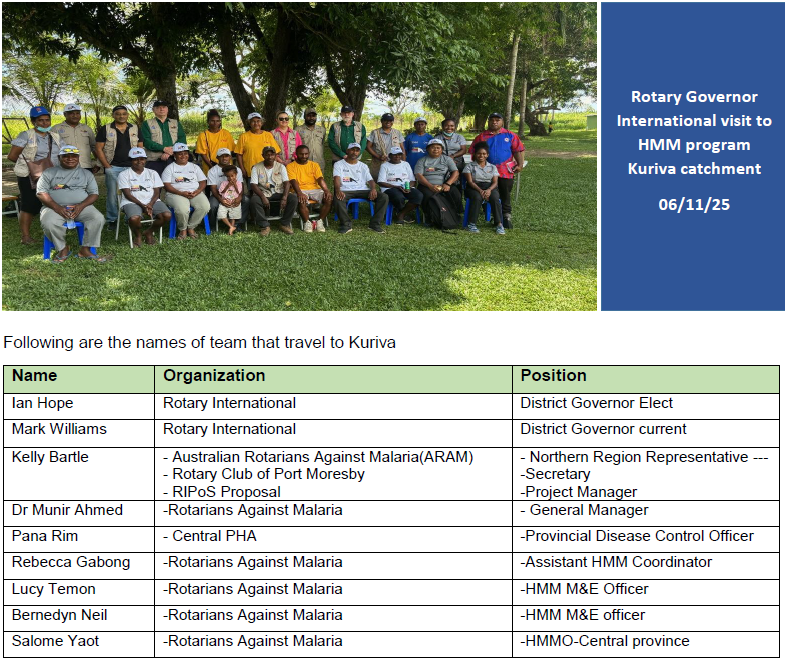
Risk Management and District Role Funding risks are mitigated by government commitments and diversified partnerships. The district, led by DG Mark Williams, plays a key role in oversight and support, ensuring program continuity and expansion.